The Pyramid of Risk
I once read about this in a Hargreaves Lansdown (HL) newsletter. Hargreaves Lansdown is a major British financial service company based in Bristol, England. It is the UK's largest retail investment platform for private investors (at the time of writing) and typically operates on an execution basis only. This means you decide what to buy/sell, how much and when. HL will execute your orders. More recently, they have introduced a Managed Service, but you need a sizable account to access those services.
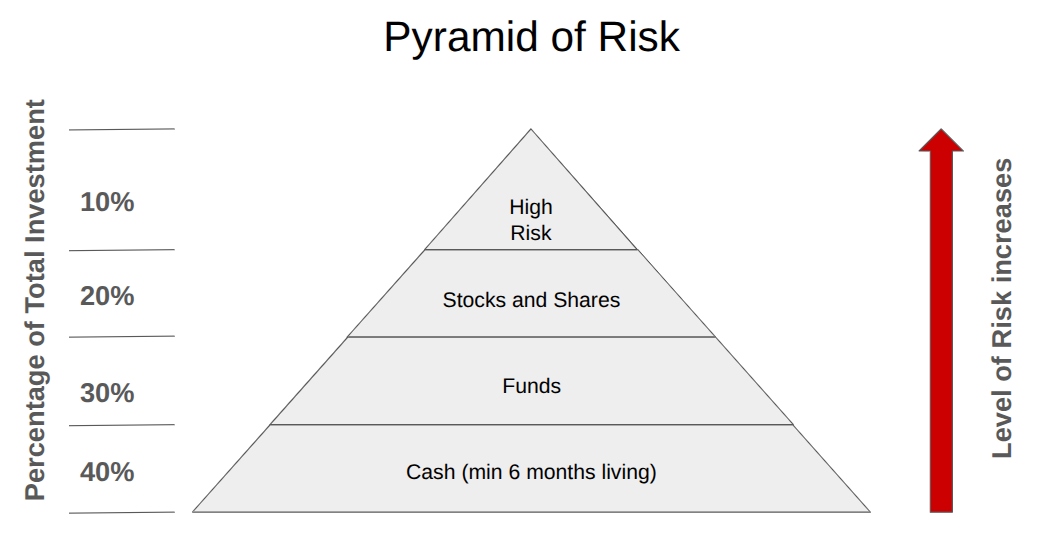
The main purpose of the Pyramid of Risk is to help you structure your portfolio. Your portfolio can consist of anything you want, but people starting out (and I was one of them) weren’t sure how much money to put into which asset class. Each asset class carries a different risk profile.
Over many years, I have adapted HLs’ Pyramid of Risk and have created my own version. I have shared this with family members as an aid to planning their financial goals. It starts with safe and very low risk assets and moves up the risk scale with more riskier assets. The suggestion is that you want to risk less on very high risk assets (just in case things don’t work out as you planned).
As you can see from the diagram opposite, I always start with Cash, and then move up the pyramid into riskier assets. You will also notice that the percentage of the portfolio being spent on riskier assets decreases the higher you progress up the pyramid. This is just a guide and I appreciate that everyone’s view of risk is different and I respect that.
Diversification: Sectors and Regions
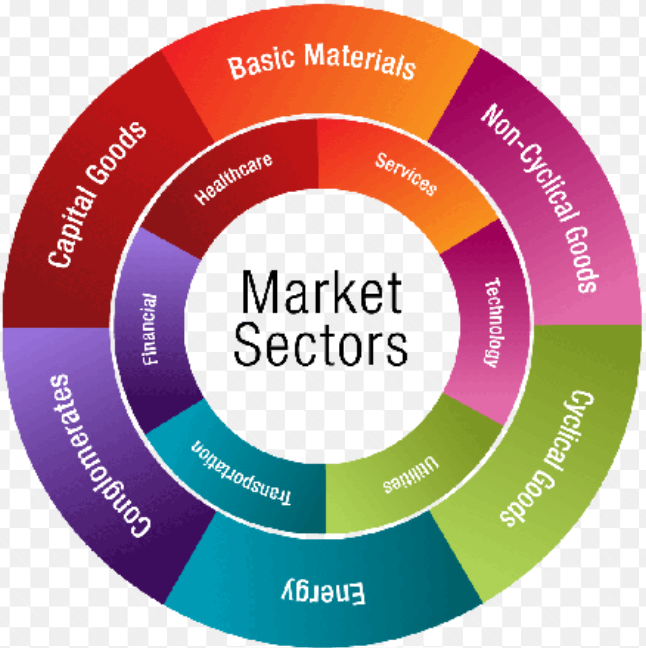
One way to help manage risk is to “diversify” the portfolio not only by asset, but also by sector and regions.
Examples of Sectors are:
Healthcare
Banks
Telecoms
Commodities (Gold, Silver, Oil, ect)
Etc.
So by not investing all your money in, say, Banks, means that if there’s another financial crisis then not all your money is at risk. Also, when some sectors are doing badly, often others are doing well. So to have a spread of sectors is great for diversifying your portfolio.
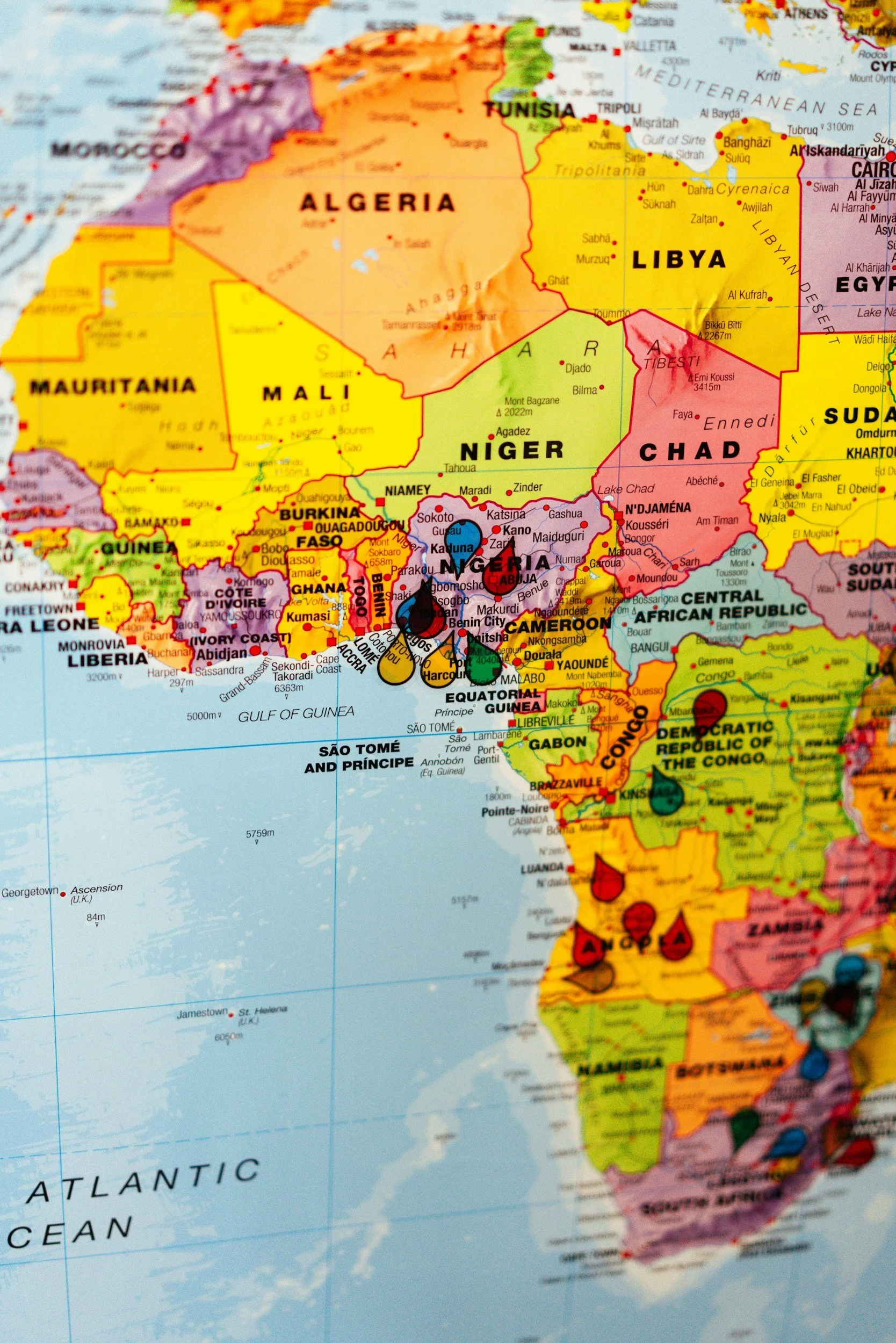
Examples of Regions are:
UK
Europe
USA
Far East/Asia
South America
Africa
Middle East
Emerging Markets (not strictly a region but is typically spread across several regions)
Etc.
Having investments in different regions/countries is another great way to diversify your portfolio, because if a region is doing badly (economically) then not all your portfolio does badly.
Although this may sound complex, once you start to understand what your financial goals are, your appetite to risk and how much time and effort you want to/are able to put into your investing, it does become easier.
If you want to know more or simply want to have a chat then please reach out.